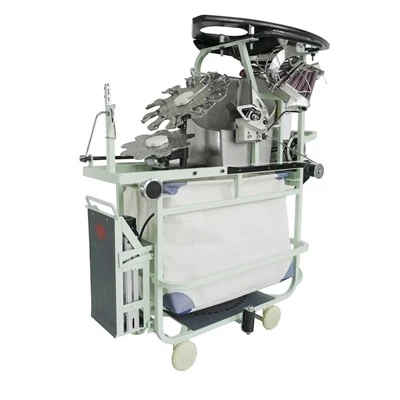
As a supplier of Doffing Robots, I’ve witnessed firsthand the growing demand for these innovative machines in various industries, especially in healthcare and high – tech manufacturing. Doffing robots are designed to safely and efficiently remove personal protective equipment (PPE), which is crucial in preventing the spread of contaminants. However, the performance and longevity of these robots are significantly influenced by the environmental conditions in which they operate. In this blog, I’ll delve into the key environmental requirements for a Doffing Robot. Doffing Robot
Temperature and Humidity
Temperature is one of the most critical environmental factors for Doffing Robots. Most Doffing Robots are equipped with sensitive electronic components, such as sensors, motors, and control boards. Extreme temperatures can have a detrimental impact on these components.
High temperatures can cause overheating of the robot’s internal parts. For example, if the temperature in the operating environment exceeds 40°C (104°F), the motors may experience increased resistance, leading to reduced efficiency and potentially causing premature wear. Moreover, high temperatures can also affect the accuracy of sensors. Some sensors rely on precise electrical signals, and elevated temperatures can introduce noise into these signals, resulting in inaccurate readings and potentially faulty operations.
On the other hand, low temperatures can be equally problematic. When the temperature drops below 0°C (32°F), the lubricants used in the robot’s joints may thicken, increasing the friction between moving parts. This can lead to increased energy consumption, slower movement speeds, and even mechanical failures. Additionally, cold temperatures can cause the contraction of materials, which may lead to misalignments in the robot’s structure.
The optimal temperature range for most Doffing Robots is between 15°C – 30°C (59°F – 86°F). Within this range, the electronic components can operate stably, and the mechanical parts can function smoothly.
Humidity also plays an important role. High humidity can lead to condensation on the robot’s surface and inside its components. Moisture can cause corrosion of metal parts, short – circuits in electronic circuits, and the growth of mold and bacteria. A relative humidity level of 30% – 60% is generally recommended. In environments with high humidity, dehumidifiers can be used to maintain the appropriate humidity level.
Air Quality
The air quality in the operating environment of a Doffing Robot is another crucial consideration. Dust, particulate matter, and chemical contaminants in the air can have a negative impact on the robot’s performance.
Dust can accumulate on the robot’s sensors and moving parts. For optical sensors, dust particles can block the light path, reducing the sensor’s sensitivity and accuracy. On moving parts, dust can act as an abrasive, accelerating the wear of gears, bearings, and other components. In industrial settings where there is a high concentration of dust, such as mining or construction sites, it is necessary to use air filtration systems to reduce the dust level in the air.
Chemical contaminants, such as volatile organic compounds (VOCs), acids, and alkalis, can also be harmful to the Doffing Robot. These chemicals can corrode the robot’s metal and plastic parts. In healthcare facilities, for example, disinfectants and cleaning agents may release chemical vapors. If the ventilation in the area is poor, these vapors can accumulate and damage the robot. Adequate ventilation systems should be installed to ensure the continuous removal of chemical contaminants from the air.
Lighting Conditions
Proper lighting is essential for the operation of Doffing Robots, especially those that rely on vision – based sensors. Insufficient lighting can make it difficult for the robot to accurately identify and grasp the PPE. For example, if the lighting is too dim, the contrast between the PPE and the background may be low, causing the robot’s vision system to misinterpret the images.
On the other hand, excessive or uneven lighting can also cause problems. Glare from bright lights can create reflections on the PPE or the robot’s surface, which can interfere with the vision system’s ability to capture clear images. The ideal lighting conditions should provide uniform illumination with an appropriate intensity. In some cases, adjustable lighting systems can be installed to ensure that the lighting can be optimized according to the specific requirements of the Doffing Robot.
Floor and Space Requirements
The floor on which the Doffing Robot operates needs to be flat and stable. Uneven floors can cause the robot to tilt or wobble during operation, which can affect its balance and accuracy. In addition, the floor should be able to support the weight of the robot and any additional equipment.
The operating space for the Doffing Robot also needs to be carefully considered. The robot should have enough space to move its arms and perform the doffing operations without colliding with other objects. A clear radius of at least 1 – 2 meters around the robot is usually required. In addition, the height of the space should be sufficient to accommodate the full range of motion of the robot’s arms.
Noise and Vibration
Noise and vibration in the environment can also affect the performance of Doffing Robots. High – level noise can interfere with the robot’s acoustic sensors, if any. For example, in a manufacturing plant with loud machinery, the noise can mask the sounds that the robot’s acoustic sensors are designed to detect, leading to inaccurate operations.
Vibration can cause problems for the robot’s mechanical and electronic components. Continuous vibration can loosen the connections of electronic circuits, leading to intermittent failures. It can also cause premature wear of mechanical parts due to the additional stress. To minimize the impact of noise and vibration, the Doffing Robot can be installed on vibration – isolating mounts, and noise – reducing enclosures can be used if necessary.
Power Supply
A stable power supply is crucial for the reliable operation of Doffing Robots. Fluctuations in voltage or power outages can cause the robot to malfunction or even damage its electronic components. It is recommended to use a dedicated power line for the Doffing Robot to avoid interference from other electrical equipment. In addition, an uninterruptible power supply (UPS) can be installed to provide backup power in case of a sudden power outage, allowing the robot to complete its current operation safely and shut down properly.
Conclusion
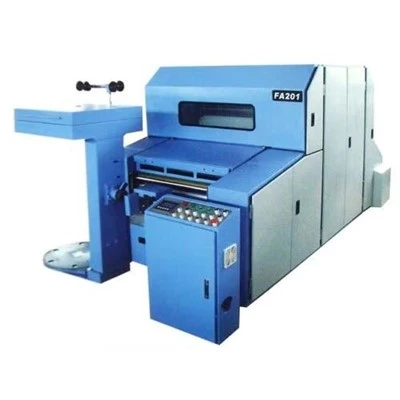
Combing Machine In conclusion, the environmental requirements for a Doffing Robot are diverse and complex. Temperature, humidity, air quality, lighting conditions, floor and space requirements, noise and vibration, and power supply all need to be carefully managed to ensure the optimal performance and longevity of the robot. As a supplier of Doffing Robots, we are committed to providing our customers with high – quality products and comprehensive technical support. If you are interested in our Doffing Robots and would like to discuss your specific environmental conditions and requirements, we welcome you to contact us for procurement and further discussions.
References
- "Industrial Robot Handbook", John Wiley & Sons, Inc.
- "Environmental Factors Affecting Electronic Equipment", IEEE Press
- "Automation in Healthcare: Best Practices", Springer Publishing
Shandong Hongye Machinery Co., Ltd.
Shandong Hongye Machinery Co., Ltd. is one of the most professional doffing robot manufacturers and suppliers in China, featured by quality products and low price. Please rest assured to buy advanced doffing robot in stock here and get quotation from our factory. Also, 1 year warranty is available.
Address: Room 1104, Building No. 2, Haier Yunjie, No. 99 Chongqing South Road, Qingdao, China
E-mail: sales@seavincn.com
WebSite: https://www.sdhymachinery.com/
