Hey everyone, thanks for popping by – I’m stoked to chat about something I get asked literally every week here at [our company], and that’s the compression strength of plastic square mesh. Look, I’m not some ivory-tower engineer who’s gonna throw a bunch of jargon at you and call it a day. I’m the guy who fields calls from contractors, farmers, DIYers, and warehouse managers all needing to know if the mesh they’re eyeballing can handle the job. So let’s cut to the chase, no B.S. Plastic Square Mesh
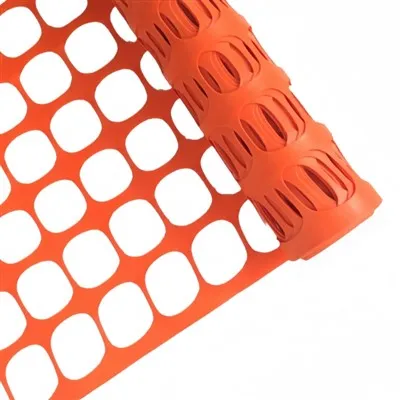
First off, let’s get one thing straight: plastic square mesh isn’t a one-size-fits-all product. I know that sounds basic, but you’d be shocked how many folks call up asking “what’s the compression strength” like it’s a single number we can slap on a label and call it done. The truth is, that number depends on three big factors: the plastic we use, the gauge (that’s how thick the mesh strands are), and the opening size. Let’s break each down, because this is where 90% of the confusion happens.
First, the plastic base. Most quality plastic square mesh we supply is made from HDPE – high-density polyethylene. Why HDPE? It’s tough, it’s flexible enough not to crack under pressure, and it’s resistant to UV light (super important if you’re using it outside). The compression strength here is way higher than, say, LDPE (low-density polyethylene), which is soft and bends like a wet noodle under even light loads. We also sometimes use a reinforced version for heavy-duty jobs – that’s HDPE blended with a tiny bit of polypropylene for extra rigidity. I can’t stress enough that cutting corners on plastic material is the fastest way to get mesh that fails when you need it most. We’ve had customers tell us horror stories about cheap imported mesh that crushed under just a few pallets of supplies – that’s exactly why we only use food-grade, industrial-grade HDPE for all our stock.
Next up, strand gauge and opening size. This is the stuff that makes or breaks compression strength. Let’s take a couple of examples to make it real. We carry a standard-duty mesh with ½-inch openings and 14-gauge strands. What’s its compression strength? Typically, around 2,000 pounds per square foot (psf). That’s enough for things like small warehouse storage for light boxes, garden edging, or temporary ground cover to prevent weeds. Then we have our heavy-duty model – 1-inch openings, but way thicker 8-gauge strands. That one jumps up to 8,000 psf. That’s for stacking pallets of bricks, concrete blocks, or heavy machinery parts. Wait, and if you go even thicker – like 6-gauge strands with 1.5-inch openings – we can get up to 12,000 psf. I’ve had a landscaping company use that exact mesh as a temporary path for a 10-ton excavator last summer, and it held up no problem.
Now, here’s a key point most suppliers won’t tell you: compression strength isn’t just about how much total weight the mesh can hold. It’s also about point load vs. uniform load. Uniform load is when the weight is spread evenly across the mesh – like a whole pallet of boxes sitting flat on it. Point load is when the weight is concentrated in one spot, like a forklift wheel driving across it. That heavy-duty 8-gauge mesh I mentioned? Its uniform load is 8,000 psf, but its point load is around 1,500 pounds per square inch (psi). That’s why you can’t drive a forklift over standard-duty mesh – the point load from the wheel will crush it, even if the total uniform weight is under 2,000 psf. We’ve had so many customers make that mistake, so now we always ask them what kind of load they’re putting on it – total uniform, or point loads like equipment or wheels.
Let’s talk about real-world applications, because that’s what matters. Last month, a customer from a local greenhouse called us. They needed mesh to go under raised beds to keep gophers out, but they also had a little dump cart that held soil and would drive over the beds. They were trying to decide between our standard and heavy-duty. We told them standard-duty would handle the cart (its point load was under 1,000 psi, which is under standard’s 1,200 psi point load), but go with heavy-duty to be safe from any accidental drops of heavy pots. That’s exactly what they did, and they left a 5-star review saying it’s worked flawlessly for 6 months now.
Another example: a warehouse customer needed mesh for a mezzanine floor add-on. They were storing pallets of office supplies, so uniform load was around 5,000 psf. We recommended the 10-gauge, ¾-inch mesh, which has a 6,500 psf uniform load. It’s been up for a year, no sagging, no issues. They actually called back last week to order 50 more rolls for another section. I love when that happens – it means we matched the right product to their needs.
Now, let’s get into some common myths I hear all the time. Myth #1: All plastic mesh is weak, so you should use metal. Yeah, only if you need to hold 50,000 pounds, and even then, a high-grade plastic mesh is way lighter, cheaper, and doesn’t rust. For 90% of commercial and residential jobs, plastic is more than enough, and way easier to install. Myth #2: Thicker strands equal higher compression strength. Mostly true, but opening size matters too. If you have super thick strands but huge openings, the mesh has fewer support points, so compression strength drops. That’s why we test every single batch of our mesh in-house – we don’t just take the manufacturer’s word for it. We run uniform load tests, point load tests, UV resistance tests, all of it.
Wait, what about temperature? Does that affect compression strength? A little, but not enough to worry about for most uses. HDPE starts to get slightly softer in extreme heat (over 120°F) and slightly stiffer in cold (under 32°F). But even in Arizona summer heat, our mesh only loses about 5-10% of its compression strength – that’s negligible for most jobs. We do make a specialized cold-resistant version for customers in places like Alaska, but that’s a custom order, not our standard stock.
Now, let’s talk about how to pick the right mesh for your job, because that’s the whole point. Don’t just ask for compression strength – tell us two things: 1) What’s the total uniform weight you’ll be putting on it, and 2) Are there any point loads (forklifts, equipment, heavy items dropped in one spot)? Then we can match you to the right gauge and opening size. If you’re not sure, just tell us your job – we’ve been doing this for 12 years, we can help. I’ve helped guys in construction, farming, landscaping, even people setting up temporary flooring for events figure out what they need.
Oh, and one more thing: installation affects compression strength too. If you stretch the mesh too tight between supports, you’ll get extra strength, but if you leave it saggy, it’s gonna fail way earlier. Same with the supports – if your support beams are more than 4 feet apart, even heavy-duty mesh won’t hold as much. We always recommend supports every 3 feet for standard-duty, every 4 feet for heavy-duty. That’s a small detail, but it makes a huge difference.
I know this got a little long, but compression strength of plastic square mesh isn’t something you can guess. Cutting corners on material or gauge will cost you down the line – either the mesh breaks, you have to replace it, or worse, it causes safety issues. We’ve seen that too – a customer a couple years ago used cheap mesh for a patio, and it broke when a group of people were standing on it. No one got hurt, but it was a mess. That’s why we’re so strict about what we stock.
Look, if you’re in the market for plastic square mesh and you’re trying to figure out the right compression strength for your project, don’t overcomplicate it. Shoot us a message or give us a call – we’ll walk you through everything, no pressure, no salesy nonsense. We’re not just a supplier, we’re guys who use this stuff too. I remember when I first started, I worked out of my garage, delivering rolls of mesh in my pickup truck. Now we have a warehouse full of inventory, but I still answer every call personally (most days, at least – I have a team, but I’m still here).
At the end of the day, plastic square mesh’s compression strength is all about matching the product to your specific load. There’s no universal number, but with our range of standard and heavy-duty options, we’ve got something for every job – from a small garden bed to a large warehouse mezzanine. We stand behind every roll we sell, too – if it doesn’t hold up like we said, we’ll make it right.

If you’re ready to grab a quote, or just have more questions, hit us up whenever. No weird forms to fill out or hoops to jump through. We’re here to help you get the right mesh for your project, so you don’t have to worry about it failing when you need it most. Thanks for reading, and can’t wait to work with you soon.
Safety Fence References
- American Society for Testing and Materials. Standard Test Method for Compressive Properties of Rigid Plastics. ASTM D695-15, 2015.
- Plastics Industry Association. HDPE Properties and Applications for Structural Mesh. 2022.
- National Sanitation Foundation. Food-Grade Plastic Mesh Performance Standards. NSF/ANSI 51, 2021.
- Construction Specifications Institute. Structural Mesh Materials for Temporary and Permanent Ground Applications. CSI Guide Spec, 2023.
Shaoxing Yongte Plastics Co., Ltd.
We are one of the most reliable plastic square mesh manufacturers and suppliers in China, specialized in providing high quality customized products. We warmly welcome you to wholesale discount plastic square mesh for sale here from our factory. Contact us for pricelist and free sample.
Address: INDUSTRIAL PARK, LIZHU TOWN, KEQIAO DISTRICT, SHAOXING CITY, ZHEJIANG PROVINCE
E-mail: support@sxxyongte.com.cn
WebSite: https://www.fenceplastic.com/
