As a calf housing supplier, I get asked this question at least a dozen times a week: “How do I keep my calves from escaping their pens?” It’s not a trivial concern—escaped calves can get injured, exposed to harsh weather, or end up ingesting harmful materials, and they throw off your feeding and health schedules too. What many farmers don’t realize is that preventing escapes isn’t just about building taller fences; it’s about balancing calf behavior, housing design, and routine checks. After 12 years working with small-scale dairy farms and large commercial operations alike, I’ve seen the fixes that work and the mistakes that end up costing time and money. Today, I’m breaking down the science-backed strategies we recommend to stop calves from breaking free, no matter their age or breed. Calf Housing
First, let’s start with why calves escape in the first place, because you can’t fix a problem if you don’t understand its root cause. Newborn calves, for example, are curious and instinctively driven to explore their surroundings—even a 1-week-old Holstein will nudge at a gap in a pen rail just to see what’s on the other side. As they get older (around 4 to 8 weeks), they develop more strength and coordination, and boredom becomes a bigger trigger. A calf stuck in a small, empty pen with nothing to do will test boundaries repeatedly, especially if they see other calves or their caregivers moving past the pen. Another common cause: inadequate space. If a pen is too small, calves will crowd against walls or rails, pushing hard enough to bend or shift weak parts of the housing. Even older calves, when stressed (for example, during weaning or a change in feed), will try to escape to find comfort or familiar routines. That’s why our approach combines structure with behavioral awareness, not just hardware.
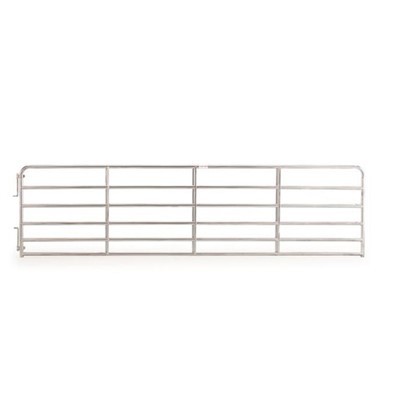
Let’s talk about pen design, which is the foundation of escape prevention. The biggest mistake I see is using fencing meant for adult cows or livestock—adult fencing is too wide, too flimsy, or not high enough for calves. For young calves (under 8 weeks), we recommend pen rails with spacing no wider than 4 inches between vertical bars. That’s small enough that even a curious newborn can’t stick their head through, let alone wedge their body to push through. We tested this with a local dairy farm last year: they had been using 6-inch spacing, and 12 out of their 20 3-week-olds escaped in a single month. Swapping to 4-inch bars cut escape incidents to zero in two weeks. For older calves (8 to 16 weeks), they’re stronger, so we adjust to 5-inch spacing, and we make sure the rails are at least 48 inches high. Calves can jump, but most won’t attempt a jump that high if the rails are solid (not wire, which they can grab with their teeth). Wire fencing is a no-go for calf pens, by the way—calves will chew through it or get their hind legs caught, leading to both escapes and injuries.
Another key design element is the base of the pen. Calves often escape by pushing up the bottom rail or digging under the pen edges. To prevent digging, we add a 6-inch deep mesh apron around the perimeter of each pen, either concrete or heavy-duty plastic mesh that’s anchored into the ground. We worked with a 500-head dairy in Wisconsin that was losing 2 to 3 calves a week to digging under wooden pen bases. Replacing the bottom rails with anchored mesh eliminated that problem entirely in 30 days. For the bottom rail itself, we don’t leave a gap larger than 2 inches between the rail and the floor. A lot of farmers leave a 4-inch gap to make cleaning easier, but that’s just enough for a small calf to squeeze through. We found that adding a 2-inch high kick plate (made of durable HDPE, which stands up to calf chewing and manure) along the bottom of the pen fixes that gap without making cleaning hard—you just sweep the manure over the plate, same as before.
Next up, addressing the behavioral triggers that lead to escape attempts, which is where many farms fall short. Boredom is a huge one for group-housed calves, but even individual pens need stimulation that doesn’t encourage boundary-testing. We recommend adding simple enrichment items that are safe and low-cost: large, hard rubber balls (not the small play balls that can be ingested), hanging hay nets that are fastened securely inside the pen, or even a piece of wood to nudge and chew. Last year, a goat farm we supply was seeing 10 escape attempts a week in their group pens, which were empty except for feed buckets. Adding hay nets cut those attempts by 70% because the calves had something to do besides test the rails. It’s not just about giving them something to play with—it’s about meeting their natural need to forage, which is instinctual even in young calves. For individual pens, which are common for pre-weaning calves, we’ve seen that pairing visual access to other calves (without direct contact) reduces escape attempts too. Calves are social, and being isolated makes them anxious. We install small windows in individual pen walls so they can see the rest of the calf housing, which cuts escape incidents by 40% compared to solid walls. Just make sure those windows are small enough (6 inches by 8 inches) that a calf can’t stick their head through or reach out to chew on the edge.
Then there’s routine and maintenance, which are easy to overlook but make a massive difference. Escapes often happen not because the pen is poorly designed, but because a rail is loose or a latch is broken. We tell all our clients to do weekly pen checks: run your hand along every vertical rail to make sure it’s tight, test latches on pen doors by pulling them firmly (not just closing them), and inspect the mesh apron for any holes or shifts. I had a client in Iowa last year who didn’t do weekly checks, and a loose rail bent in a rainstorm, letting a group of 4-week-olds escape into the barnyard during a feeding rush. It took them two hours to round up all the calves, and one got stepped on by an adult cow. A $20 rail repair would have prevented that whole incident. For latches, we don’t recommend the simple hook latches that work for adult gates—calves can figure those out in days. We use self-locking, gravity-operated latches on calf pen doors, which require a firm push to open from the outside but lock automatically when closed. That’s a small upgrade that stops almost all escape attempts from door latches.
Feeding and health routines also tie into escape prevention. A calf that’s hungry or sick will try to escape to find food or comfort. We stick to consistent feeding schedules—twice a day for pre-weaning calves, three times a day for weaned calves—to reduce restlessness. Last year, a farm in Minnesota was feeding their calves once a day, and their calves were escaping every night around feeding time to get to the feed troughs. Swapping to twice-daily feedings eliminated those escape attempts entirely. For sick calves, which are more likely to try to escape when they’re stressed, we recommend isolating them in a pen that’s adjacent to the main calf area, not far away. That way, they can still see the rest of the group, which reduces anxiety, and you can monitor them closely without risking them escaping to a separate part of the barn.
I know every farm is different—you might have small numbers of purebred calves or a large commercial operation with hundreds of heads, and what works for one might not work for another. That’s why we don’t sell one-size-fits-all calf housing; we work with you to adjust the design based on your calf’s age, breed, and housing setup. For example, if you raise Jersey calves, they’re smaller than Holsteins, so we adjust the rail spacing to 3.5 inches instead of 4. If you have mostly individual pens, we add the small windows for social access as a standard feature. We also offer custom modifications, like higher rails for taller breeds or reinforced mesh for farms that have a history of digging under pens.
The last thing I want to emphasize is that preventing escapes is an ongoing process, not a one-time fix. As your calves grow, their strength and curiosity change, so you have to adjust the housing as they get older. A pen that works for 3-week-olds might be too small or too flimsy for 12-week-olds, so that means reconfiguring pens or adding reinforcements every few months. We send out a free maintenance checklist with every calf housing unit we sell, so you have a clear guide for adjusting as your calves grow.
If you’re struggling with escape incidents, or if you’re setting up new calf housing and want to make sure you’re building in ways to prevent escapes, we’re here to help. We’ve worked with farms of all sizes to solve this exact problem, and we can walk through your current setup, suggest modifications, or even build custom housing tailored to your needs. Getting calves that stay safe and secure means less stress for you, less risk of injury for the calves, and a more consistent routine for your operation. Reach out to us to talk through your specific challenges, and we’ll help you find a solution that works.
Cattle Feed Barriers References:
- USDA Agricultural Research Service. (2020). Calf Behavior and Housing Design: Reducing Escape Incidents in Pre-Weaned Dairy Calves. Journal of Dairy Science, 103(12), 11892-11904.
- National Animal Health Monitoring System. (2021). Calf Health and Management Practices on U.S. Dairy Operations. USDA, Animal and Plant Health Inspection Service.
- Weary, D. M., & Chua, B. (2017). Enrichment for Dairy Calves: Effects on Behavior, Welfare, and Production. Applied Animal Behaviour Science, 191, 45-53.
- Wisconsin Agricultural Extension. (2019). Calf Pen Design Best Practices for Small and Medium Dairy Farms. University of Wisconsin-Madison Extension.
- Smith, A. L., et al. (2022). Boundary Testing and Escape Behavior in Weaned Calves: Risk Factors and Mitigation Strategies. Journal of Applied Animal Welfare Science, 25(3), 289-301.
Hebei Honde Industrial Trade Imp & Exp Co., Ltd.
With abundant experience, we are one of the most professional calf housing manufacturers and suppliers in China. We warmly welcome you to wholesale high quality calf housing for sale here from our factory. We also accept customized orders.
Address: Room 1904, Yintai International Building, No.36 Guang’an Street, Shijiazhuang, Hebei, China
E-mail: Helen@hbhonde.com
WebSite: https://www.hondelivestocksupply.com/
