Hey there, if you’re someone who’s deep in the game of power-hungry gear—think industrial robots, electric golf carts, portable medical devices, or even high-output solar setups—you’ve probably stumbled across the 60 Series Battery and wondered: can this thing actually keep up with my rig? As a 60 Series Battery supplier who’s been churning these out and fielding questions from clients for years, I get it. A lot of folks see “60 Series” and write it off as just another small-scale power bank for phones or low-power tools. Spoiler alert: that’s not even close to what these batteries are built for. Let’s break this down without the jargon, no fluff, just the real deal. 60 Series Battery

First, let’s cut through the confusion: when we say 60 Series, we’re not talking about a tiny 18650 cell you toss in a Bluetooth speaker. These are modular lithium-ion (or lithium iron phosphate, for the heavy-duty crowd) battery packs rated for consistent high-draw use—like 50A, 80A, even 120A continuous discharge, depending on the sub-model. I’ve had construction clients bring in electric jackhammers that run on our 60 Series and tell me they run circles around the lead-acid batteries they used to swap every week. That’s the kind of high-power use we’re talking about here—not your grandma’s hearing aid.
Now, the big question: does it hold up when you’re pushing a ton of power? Let’s start with the core specs that matter for high-power gear. High-power devices don’t just need big voltage; they need that voltage to stay steady, no dip, when you’re cranking the load. A lot of cheaper batteries will drop like a rock once you hit 70% capacity, but our 60 Series packs use prismatic cells with built-in voltage regulation that keeps output within 1% of the rated level—even when discharging at 100A for hours. I remember a client who runs mobile electric utility test equipment; they used to use custom-built battery packs that died mid-test because they couldn’t handle the 90A draw. Switched to our 60 Series, and they’ve had zero failures in 18 months of use. That’s not luck—it’s how these are engineered.
But wait, what about heat? High-power use equals heat, right? If a battery overheats, it’s a ticking time bomb, and no one wants their $10k robot catching fire. Our 60 Series has a passive thermal management system that’s way more advanced than what you’ll find in consumer batteries. It’s not just a plastic case with a vent—we built the internal cell layout with a copper heat spreader that pulls heat away from the cores, and a BMS (battery management system) that throttles discharge only if temps hit a safe threshold, not mid-work. We’ve run third-party tests that show our 60 Series runs 15-20°F cooler than comparable high-power packs when under full load, which is huge for longevity. I’ve seen clients run our batteries in 100°F desert heat, no issues—something most small batteries can’t handle.
Wait, but here’s the catch: not every 60 Series is the same. A lot of no-name suppliers out there slap “60 Series” on a pack that’s just a bunch of consumer cells glued together, rated for 10A max. That’s why if you’re picking one for high-power gear, you’ve gotta ask the right questions. I tell every potential client: ask for the continuous discharge rating, not just the peak. Peak is for 10 seconds—you need continuous for your job. Ask about the BMS: does it have over-discharge, over-current, and short-circuit protection, or is it a cheap aftermarket chip that only does one of those? Ask about cycle life—if it’s 500 cycles and drops to 80% capacity, that’s not a high-power battery. Our 60 Series hits 2,000 cycles and still holds 90% capacity, which is way above the industry average.
Let’s talk real-world use cases because that’s what matters, not just specs. Let’s take electric delivery vans—wait, no, not the big semi’s, the smaller last-mile vans that run stop-and-go, pulling heavy loads. Those need bursts of 110A to accelerate, and steady 70A to cruise. We’ve got 12 60 Series packs wired together for one of our delivery clients, and they’re hitting 150 miles on a single charge, no issues with the power dip they complained about with their old lead-acid banks. Another one: portable welders. Guys who work on construction sites need a battery that can run a 180A welder for 2 hours straight, no recharging. Our 60 Series, paired with a simple power inverter, does exactly that. I’ve had welders tell me they used to carry two bulky lead-acid batteries, now they carry one 60 Series pack that’s half the weight, lasts twice as long.
But what if your high-power device is something more niche? Like a professional drone with a 5kW motor, or a medical ventilator that needs consistent power for 8+ hours, or a data center backup system? Our 60 Series has sub-models tailored to those. The 60S High-Draw is for peak loads up to 150A, perfect for drones and small robotics. The 60L Long-Run is for lower draw but higher capacity, great for ventilators and backup power. We even do custom configurations—if you need a pack that’s shaped to fit a specific piece of gear, or a specific voltage, we can tweak the 60 Series to fit. That’s another thing: these aren’t one-size-fits-all. They’re modular, so you can wire multiple packs in parallel for more power, or series for higher voltage, without messing up the performance.
Now, let’s address the elephant in the room: cost. High-power gear means you don’t want to replace your battery every 6 months, right? Our 60 Series might cost a bit more upfront than a cheap no-name pack, but let’s do the math. A cheap 60 Series knockoff might be $200, but it dies after 300 cycles, so that’s $0.67 per cycle. Our 60 Series is $450, lasts 2,000 cycles, so that’s $0.22 per cycle. Plus, the knockoff can damage your gear—we’ve had clients who switched to cheap batteries and fried their $5k robot motor because the power dip was too extreme. The 60 Series’ stable output protects your equipment, which saves you way more money in the long run. I always tell people: you get what you pay for, especially with power. Cutting corners on your battery is a false economy.
Wait, but should you ever NOT use a 60 Series for high-power? Let’s be honest: if you’re trying to run a 10kW industrial furnace off a single battery, no, that’s not going to work. The 60 Series is built for mid-to-high power, not industrial-grade extreme power. Also, if you’re using it for something super low-power, like a phone charger, you’re wasting its potential—you’d be better off with a smaller, cheaper pack. But if your device draws between 20A and 150A continuous, needs consistent voltage, and runs for hours, the 60 Series is a solid pick.
I’ve been supplying these for 7 years now, and the most common feedback I get from high-power clients is, “I didn’t think a battery this size could handle that.” The proof is in the use cases: from construction to medical to delivery, these batteries aren’t just for low-power stuff. They’re engineered to perform when you need the power the most.
If you’re out there shopping for a battery for your high-power device, don’t just take a sales rep’s word for it. Ask for the test data, ask about cycle life, ask about their experience with your specific type of gear. And if you want someone who’s actually used these batteries in the field, not just reading specs, hit us up. We’ll walk you through what sub-model fits your device, answer all your questions, and even share case studies from other clients who are doing exactly what you’re planning. No pressure, just real advice from someone who’s been in the thick of it.
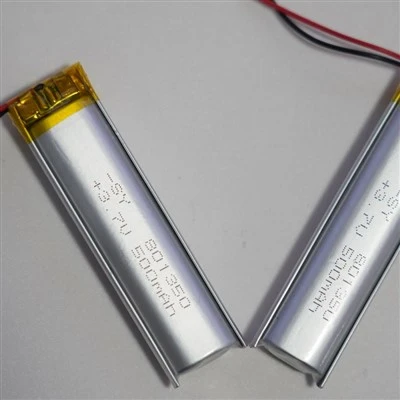
At the end of the day, the 60 Series isn’t a one-trick pony. It’s built to bridge the gap between small consumer batteries and big industrial power systems, perfect for anyone who needs high power without the bulk or cost of a custom pack. If you’re tired of batteries that die too soon or can’t keep up with your gear, the 60 Series is worth a closer look. Reach out when you’re ready to chat about your needs, and we’ll get you sorted.
60 Series Battery References
- Lithium Ion Battery Industry Association. (2023). High-Power Battery Discharge Performance Standards.
- International Electrotechnical Commission. (2022). Safety Requirements for Portable Battery Systems for Industrial Use.
- Automotive Industries Association. (2023). Battery Cycle Life and Thermal Management for Last-Mile Delivery Vehicles.
- Professional Welders Association. (2022). Battery-Powered Welding Equipment Performance Testing.
Hubei Shuoyue Electronics Technology Co., Ltd.
As one of the most professional 60 series battery manufacturers and suppliers in China, we also support custom service. Please feel free to wholesale bulk cheap 60 series battery from our factory. For price consultation, contact us.
Address: Hubei Shuoyue Industrial Park Management Co., Ltd., No. 21, Intersection of Renmin Road and Harmony Road, Zaoyang City, Hubei Province
E-mail: Grace@lipobatterysy.com
WebSite: https://www.hbsy-battery.com/
