Hey there, it’s Jake from the transformer supply team—today I’m pulling back the curtain on the standards that make a three-phase oil immersed transformer actually worth buying. I’ve been working with these bad boys for over 8 years, and I’ve lost count of how many times I’ve had to explain to a customer why the random cheap unit they found online will die in a year, while our units run 20+ no-hassle years. Let’s cut the jargon (mostly) and break down what you actually need to watch for, whether you’re a plant manager sizing a new unit or a fellow supplier trying not to sell garbage. Three Phase Oil Immersed Transformer
First, let’s get one thing straight: this isn’t just some box with wires and oil. Three-phase oil immersed transformers are the backbone of everything from residential neighborhoods to big manufacturing plants, data centers, and construction sites. The standards here aren’t just random numbers—they’re what keep your lights on and your machinery from going up in smoke. Now, I know when you hear “standards,” you might zone out, but stick with me because I’m gonna tie each one to real stuff you care about.
Let’s start with the big one: IEC and ANSI standards, depending on where you’re at. Wait, for North America, ANSI is king—specifically ANSI C57 series. For Europe, the Middle East, and most of Asia, IEC 60076 is the go-to, and sometimes national adaptations like IEEE C57 in the US. Let’s not beat around the bush—if a transformer doesn’t meet either of these, walk away. I’ve seen overseas suppliers slap “three-phase oil immersed” on a unit that barely hits 80% efficiency, just to undercut everyone. Here’s the breakdown: IEC 60076 covers everything from dielectric strength (how well the oil insulates) to temperature rise, while ANSI C57 has specific specs for load cycles and short-circuit withstand—super important for places with fluctuating power demands. For example, IEC 60076-2 talks about temperature limits: the top oil can’t exceed 105°C under continuous load, and the winding hot spot max is 110°C. That’s non-negotiable. If a vendor tells you their unit runs hotter than that, it’s not built to last.
Next up, the core and winding standards—this is where most cut corners happen. The core is the heart of the transformer; it’s made of electrical grade silicon steel, right? The standard here is that it has to be grain-oriented (GO) silicon steel, minimum grade M-19 for small to medium units, M-36 for big heavy-duty ones. Why does that matter? Because non-oriented steel wastes a ton of energy as heat. I once had a customer come to me with a transformer from a no-name supplier that drew 2% more no-load current than it should—they were throwing $1,200 a year in wasted electricity out the window. Winding specs are just as critical: the conductor has to be high-purity copper (or aluminum if you’re going for lighter weight) with a minimum conductivity of 97% IACS. No recycled scrap metal here—if the winding is subpar, you’re looking at insulation breakdown and failure in 5 years max. Also, the windings need to be properly impregnated with varnish to stop moisture from getting in—standard practice, but so many cut corners here. I’ve repaired units where the windings were just sitting in dry oil, no varnish, and they corroded from condensation in the tank.
Then there’s the oil itself—obviously, it’s oil immersed, so the oil has to be up to snuff. The standard here is mineral oil that meets IEC 60296 or ANSI C57.138. What does that mean? It has to be free of moisture (max 20 ppm for new oil), free of sludge, and have a dielectric breakdown voltage of at least 30 kV for new oil. Sludge is the enemy here—over time, it builds up on the windings and insulates them, making them run hotter. I once had a construction site call me in because their transformer was tripping breakers—turns out the vendor used old, used oil from a scrap transformer, which had sludge and moisture. They had to replace the whole unit, and it cost them a week of downtime. Don’t let that be you. Also, some units use ester oil for fire-prone areas, but that’s a niche case—standard mineral oil is still the go-to for most applications.
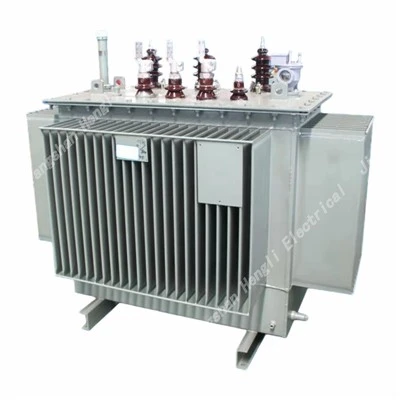
Tank and enclosure standards—this is the part that’s easy to overlook until rain or dust gets in. The tank has to be hermetically sealed, per IEC 60076-2 or ANSI C57.12. The last thing you want is air getting in, which causes oxidation of the oil and moisture buildup. Hermetic sealing means the tank is welded tight, no gaskets that will degrade over time, and sometimes has an expansion bladder so the oil can expand when it heats up without letting air in. Also, the enclosure has to have IP rating protection—for outdoor units, minimum IP54, which means it’s dust-tight and resistant to water splashes. If you’re putting it in a harsh environment, like a mine or a coastal area, go higher—IP55 or IP65, which will handle salt spray and heavy rain. I remember a customer down in Miami that got a cheap transformer from a guy up north that only had IP23—salt air ate through the tank in 3 years, and they had a leak that destroyed the windings. Oops.
Load and efficiency standards—let’s talk about what actually matters for your bottom line. Efficiency is rated at 100% load, and standard is at least 98% for medium units (100 kVA to 1 MVA) and 98.5% for larger units. That means 98% of the power going in comes out, not wasted as heat. The efficiency is calculated per IEC 60076-1 or ANSI C57.12.90—so if a vendor says “99% efficient,” call their bluff, that’s almost impossible for a standard oil immersed unit. Also, short-circuit withstand capability—per IEC 60076-5, the transformer has to handle a short circuit for at least 2 seconds without damage. That’s super important for places with high inrush currents, like manufacturing plants with big motors. I once had a food processing plant that had a motor short, and their cheap transformer couldn’t handle it—welded the windings together, and they were down for 3 days. Our units are tested to withstand 10x rated current for 2 seconds, no problem.
Testing standards—this is how you make sure the unit actually meets all those specs. No reputable supplier skips testing. The standard tests are: no-load loss test, load loss test, dielectric test (high voltage hipot test), and temperature rise test. Per IEC or ANSI, the manufacturer has to do all these tests in a certified lab, and provide a test report with the unit. I’ve had a customer send me a transformer they bought online—no test report, so I did a quick in-house test and found that the no-load loss was 30% higher than the rated value. That’s not a unit, that’s a paperweight. Also, type tests vs. routine tests: type tests are done once per model to prove it meets standards, routine tests are done on every single unit before it leaves the factory. If a vendor doesn’t offer to send you the routine test report, run—they’re hiding something.
Wait, let’s not forget about environmental standards, because everyone cares about that now. There’s a push for low-loss transformers, specifically the EU’s Ecodesign Directive or US DOE standards, which mandate maximum no-load and load losses. For example, in the US, DOE standards from 2016 require that three-phase oil immersed transformers under 500 kVA have lower losses than old units. These standards aren’t just nice—they’re actually required in many areas now. I had a customer in California that tried to get a permit for a new transformer, and the inspector refused because it didn’t meet DOE low-loss specs. Had to swap it out, cost them extra time and money.
Now, let’s tie this all together from my side as a supplier. I see so many customers get burnt by choosing the cheapest option, but the “standards” I talked about aren’t just for compliance—they’re for reliability. A transformer that meets IEC or ANSI specs won’t just work—it’ll work for decades, saving you money on downtime, electricity bills, and replacement costs. Last year, we had a customer that switched to our units after going through 3 cheap ones in 2 years—they save over $8,000 a year on electricity alone, and our units are now in their 5th year with zero issues.
If you’re in the market for a three-phase oil immersed transformer, don’t just look at the price tag. Ask for the test reports, ask which standard it meets, check the core material, the oil specs, and the IP rating. If a vendor hesitates to answer, that’s a red flag. We don’t do hidden specs—every unit we ship comes with a full routine test report, meets the latest IEC and ANSI standards, and we stand behind it with a 10-year warranty (way longer than the industry average).
At the end of the day, a transformer is a long-term investment, not a quick purchase. Cutting corners on standards leads to headaches, downtime, and extra costs down the line. If you have questions about sizing, specs, or need a quote that actually fits your needs, hit us up. We’re here to walk you through it, no sales pitch, no jargon—just honest advice and a unit that will keep your power running when you need it most.
Single Phase Pole Mounted Transformer References
IEC 60076-1: Power transformers – Part 1: General
ANSI C57.12.00: Standard for General Requirements for Liquid-Immersed Distribution, Power, and Regulating Transformers
IEC 60296: Fluids for electrotechnical applications – Unused mineral insulating oils for transformers and switchgear
ANSI C57.138: Standard for Liquid for Immersed Transformers
ANSI C57.12.90: Standard Test Code for Liquid-Immersed Distribution, Power, and Regulating Transformers
US DOE Energy Efficiency Standards for Transformers
EU Ecodesign Directive for Electrical Equipment
Zhejiang Jiangshan Hengli Electrical Co., Ltd.
Zhejiang Jiangshan Hengli Electrical Co., Ltd. is one of the most professional three phase oil immersed transformer manufacturers and suppliers in China, featured by quality products and low price. Please rest assured to wholesale cheap three phase oil immersed transformer in stock here and get pricelist from our factory. Customized orders are welcome.
Address: 212 Fuzhu Street Sidu Town, Jiangshan, Zhejiang, China
E-mail: henglijs@foxmail.com
WebSite: https://www.henlypower.com/
