If you’ve ever wandered through a busy industrial paint shop, you’ve probably noticed the towering steel drums lining the walls—filled with everything from base coats and thinners to powder coating resins and cleaning solvents. For anyone used to moving these heavy drums, a drum dolly is likely top of mind; it’s a workhorse piece of equipment designed to roll 55-gallon drums across concrete floors without straining a worker’s back or risking a dangerous spill. But here’s a question I get asked at least twice a week by paint shop managers and maintenance leads alike: “Can I actually use a standard drum dolly in my paint shop?” Drum Dolly
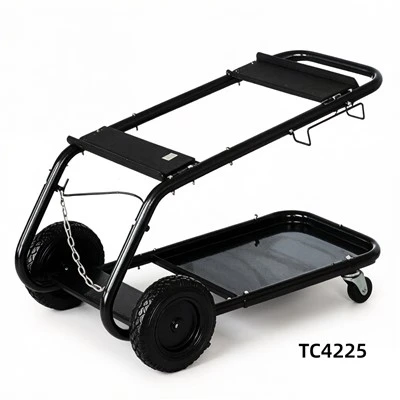
As a third-generation drum dolly supplier, I’ve spent the last 12 years talking to people in factories, auto body shops, and industrial paint facilities—so I know the answer isn’t a simple yes or no. It depends on a few key things: what the dolly is made of, how it’s constructed, and whether it’s been rated for the specific hazards of a paint shop. Let me walk you through what I’ve learned, because the last thing any paint shop needs is a piece of equipment that causes more problems than it solves.
First, let’s break down the unique challenges of a paint shop environment that make it different from, say, a warehouse storing non-flammable raw materials. Paint shops, especially those handling solvent-based coatings or powder paint, have strict OSHA standards for flammability, static buildup, and chemical resistance. A standard drum dolly—say, the budget model you picked up at a general industrial supply store—might work fine in a storage warehouse, but put it in a paint shop and it could turn into a safety risk.
Let’s start with static electricity. Most standard drum dollies have steel wheels with rubber tires, and steel frames that conduct electricity. When you roll a drum full of solvent-based paint or thinner across a concrete floor, the friction between the rubber tire and concrete can generate static charges. If that charge builds up and doesn’t have a path to ground, it can spark—and that’s a disaster around flammable paint vapors. I’ve seen this firsthand at a small auto body shop in Ohio a few years back. They used a generic steel drum dolly to move a drum of polyurethane thinner, and when they rolled it across the shop floor, a tiny spark jumped from the dolly’s frame to a nearby aerosol can of primer. The can exploded, singed the shop’s back wall, and shut them down for three days while safety inspectors checked their entire facility. They could have avoided it entirely with a static-dissipating drum dolly. That’s a big difference most people don’t realize: regular dollies can generate static, but paint shop-certified models are built to bleed that charge to ground, preventing sparks.
Next, chemical resistance. Paint shops deal with some harsh stuff. Solvents like acetone, toluene, and xylene are common, as well as water-based paints, powder coating residues, and even harsh cleaning chemicals used to strip equipment. A standard drum dolly with a cheap painted steel frame or low-grade rubber wheels will start to break down when exposed to these chemicals. The paint will chip, the wheels will crack or get sticky, and eventually, the dolly will warp or become unstable—risking a drum tipping over and spilling hazardous material. I had a customer last year who ran a large industrial paint facility in Indiana. He told me he’d gone through three budget dollies in 18 months because the solvents in his base coats ate through the wheel rubber, and the frames started rusting from splatters of alkaline cleaning solution. When he switched to our chemically-resistant dollies—made with powder-coated, acid-and-solvent-resistant steel and wheels lined with nitrile rubber—he hasn’t replaced a dolly in over two years. That’s not just a convenience; it’s a safety and cost savings play.
Then there’s load capacity and design. Paint shops don’t just move empty drums—they move full drums of paint, which can weigh anywhere from 400 to 800 pounds for a 55-gallon metal drum. Some standard dollies have a load rating of only 500 pounds, which means they’re operating at or above capacity when moving a full paint drum. Overloaded dollies can tip, bend, or break, sending hundreds of pounds of hazardous material crashing to the floor. Worse, a cracked dolly frame can catch on a threshold or a piece of equipment in the paint shop, causing a sudden stop that spills the drum. The right drum dolly for a paint shop is rated for at least 1,000 pounds—plenty of margin for heavy full drums—and has a low profile design so the drum sits closer to the floor, making it more stable even when you’re moving around obstacles like paint mixing stations, hoses, or other equipment.
Wait a second, though—what if your paint shop is using only water-based paints, not solvent-based? Does that change anything? It does, but not as much as you might think. Even water-based paints can leave sticky residues on dollies that attract dust and dirt, which can then get onto the paint drums and contaminate the product. And water, especially if it’s mixed with mild acids or bases used in cleaning, can cause standard steel dollies to rust over time. So even if you’re not dealing with flammable vapors, a paint shop needs a dolly that’s easy to clean, resistant to chemical splatters, and stable enough for heavy drums.
I know, I know—you’re probably thinking, “Why can’t I just modify a standard dolly for my paint shop?” It’s a question I hear a lot. A customer in Michigan tried that a few years ago. He took a standard steel drum dolly, added a grounding wire to the frame, and replaced the rubber wheels with nitrile ones. It worked for about a month, until the grounding wire corroded from paint fumes and broke, and the new nitrile wheels started to crack from repeated contact with hot paint drips. Modifying a standard dolly is a Band-Aid, not a solution. It doesn’t address the structural load rating, and you’re not guaranteed that all the parts work together to meet the unique demands of a paint shop. At the end of the day, a drum dolly purpose-built for paint shops is engineered to handle all those hazards from the start, so you don’t have to guess if it’s going to work when you need it to.
Now, let’s talk about the practical stuff that’s easy to overlook. Paint shop floors aren’t always perfectly smooth concrete. There are expansion joints, drains, and slight unevenness from years of use. A standard dolly with small wheels will get stuck on expansion joints, making it hard to move heavy drums without exerting extra effort (which leads to more strain on workers, and more chance of spills). Paint shop-certified dollies have larger, wider wheels—often 8 to 10 inches in diameter—that roll over those small obstacles easily. Some even have swivel casters for tight turns around mixing stations or drying racks, which is a huge help in busy, cramped paint shop layouts.
Another thing: OSHA and NFPA compliance. Paint shops are heavily regulated, especially when it comes to flammable materials. If you use a piece of equipment that doesn’t meet OSHA’s standards for static control and chemical resistance, you could be looking at fines or even a shutdown if an inspector comes by. A purpose-built paint shop drum dolly is designed to meet those standards, so you don’t have to add extra work or documentation to prove your facility is safe. I’ve had several customers tell me they chose our dollies specifically because they’re listed as OSHA-compliant for use in flammable vapor environments—when a regulatory rep asked for proof, they had it ready in two minutes.
Of course, there are exceptions. If you have a small, hobbyist paint shop that only uses a few gallons of non-flammable acrylic paint, and you’re moving drums infrequently (once a week or less), a standard drum dolly might work for you. But even then, I’d still recommend a dolly with static-dissipating wheels—you never know when a stray solvent vapor might make its way into the space, and it’s better to be safe than sorry. For any commercial paint shop, auto body facility, or industrial coating operation, the right drum dolly is a non-negotiable piece of safety equipment.
Let me wrap this up with a real-world example to drive the point home. Last year, I worked with a medium-sized aerospace parts paint shop in Texas. They were using standard drum dollies for two years, and had two minor spills that cost them over $15,000 in cleanup, waste disposal, and downtime. They reached out to me after a third incident, where a dolly broke mid-move and spilled 50 gallons of epoxy primer—enough to delay a $2 million order for commercial jets. We delivered 12 of our paint-specific drum dollies that same week, with static-dissipating frames, chemically resistant wheels, and a 1,200-pound load rating. Six months later, their maintenance manager sent me an email saying they haven’t had a single spill or issue with the new dollies. The downtime they lost to cleanup? Gone. The cost of waste disposal? Cut by 80%. That’s the kind of ROI that makes investing in the right equipment worth every penny.
So, to circle back to the original question: Can a drum dolly be used in a paint shop? The short answer is yes—but only if it’s the right drum dolly for that environment. A standard, unmodified dolly is a safety and financial risk in a paint shop, but a purpose-built model designed for static control, chemical resistance, and heavy loads is a game-changer for safety, efficiency, and your bottom line.

If you’re tired of dealing with flimsy, unsafe dollies that break down on you mid-shift, or you’re ready to upgrade your paint shop’s material handling equipment to meet safety regulations, I’d love to talk. We work with facilities of all sizes, from small auto body shops to large industrial coating plants, to find the right drum dolly for your specific needs—no one-size-fits-all solutions, just honest advice and equipment that works. Reach out to our team to discuss your project, get a custom quote, or ask any questions you have about making your paint shop safer and more efficient.
References
Lawn Roller OSHA. (2022). Hazard Communication Standard: Flammable and Combustible Liquids. Occupational Safety and Health Administration.
National Fire Protection Association. (2021). NFPA 30: Flammable and Combustible Liquids Code.
American Industrial Hygiene Association. (2020). Static Electricity Control in Industrial Facilities.
Material Safety Data Sheet: Common Solvents Used in Industrial Paint Applications. (2019). Society for Chemical Manufacturers and Affiliates.
Qingdao Herzhe Tools Manufacturing Co., Ltd.
Qingdao Herzhe Tools Manufacturing Co., Ltd. is one of the most professional drum dolly manufacturers and suppliers in China. We have world-leading production equipment and strong manufacturing capabilities. Please feel free to buy advanced drum dolly at competitive price from our factory.
Address: No. 406 Shuangfushan Road, Baoshan Town, Qingdao CHINA
E-mail: herzhetool@163.com
WebSite: https://www.herzhetoolsmfg.com/
