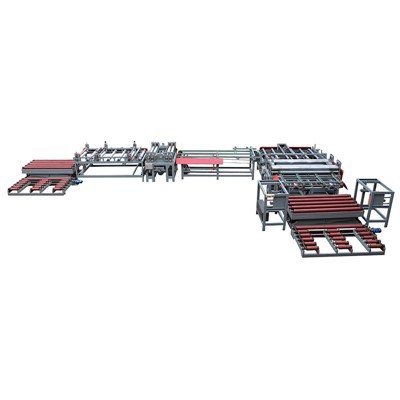
Moisture content control during the hot-pressing process of plywood is a critical factor that significantly impacts the quality and performance of the final product. As a seasoned supplier of hot presses for plywood, I’ve witnessed firsthand the challenges and opportunities that come with mastering this aspect of the manufacturing process. In this blog, I’ll share some insights and practical tips on how to effectively control the moisture content during hot-pressing for plywood. Hot-press for Plywood
Understanding the Importance of Moisture Content
Before delving into the control methods, it’s crucial to understand why moisture content matters in plywood production. The moisture content of the veneers used in plywood affects various properties of the final product, such as dimensional stability, strength, and durability.
Dimensional Stability: Plywood can expand or contract as it absorbs or releases moisture. If the moisture content is not properly controlled, the plywood may warp, cup, or delaminate over time. This is especially problematic in applications where precise dimensions are required, such as in construction or furniture making.
Strength: Excessive moisture in the veneers can weaken the adhesive bonds between the layers of plywood. During hot-pressing, water vapor can create steam pockets, which can disrupt the bonding process and lead to poor adhesion. On the other hand, if the veneers are too dry, the adhesive may not flow properly, also resulting in weak bonds.
Durability: Proper moisture content helps protect the plywood from fungal and insect attacks. Wood that is too moist provides a favorable environment for fungi and insects to thrive, which can degrade the plywood over time. By controlling the moisture content, we can enhance the long-term durability of the plywood.
Factors Affecting Moisture Content During Hot – Pressing
Several factors can influence the moisture content of plywood during hot – pressing. Understanding these factors is essential for effective control.
Initial Moisture Content of Veneers: The moisture content of the veneers before hot – pressing is a key starting point. Ideally, the veneers should have a consistent and appropriate moisture content. In general, a moisture content of 6 – 12% is recommended for most plywood applications. However, this can vary depending on the type of wood, the adhesive used, and the specific requirements of the final product.
Adhesive Type and Application: Different adhesives have different moisture requirements and behaviors during hot – pressing. For example, some adhesives may release moisture during curing, while others may absorb moisture from the veneers. The amount and distribution of adhesive applied to the veneers also affect the overall moisture balance during hot – pressing.
Hot – Press Conditions: The temperature, pressure, and pressing time in the hot – press all play a role in moisture content control. Higher temperatures can cause more rapid evaporation of moisture from the veneers, but if the temperature is too high, it can also lead to over – drying and damage to the wood. Pressure affects the flow of the adhesive and the movement of moisture within the plywood stack. Longer pressing times allow for more moisture to be removed, but they also increase production costs and may cause other issues such as over – cured adhesive.
Methods for Controlling Moisture Content
Based on the factors mentioned above, here are some practical methods for controlling the moisture content during hot – pressing for plywood:
Pre – Conditioning of Veneers: Before hot – pressing, it’s important to pre – condition the veneers to achieve the desired moisture content. This can be done through air – drying, kiln – drying, or a combination of both. Air – drying is a natural and cost – effective method, but it can be time – consuming and may not provide precise control over the moisture content. Kiln – drying, on the other hand, allows for more accurate control of the drying process and can reduce the drying time significantly. By carefully monitoring and adjusting the drying conditions, we can ensure that the veneers have a consistent and appropriate moisture content.
Adhesive Management: Selecting the right adhesive for the specific application is crucial. Consider the moisture requirements and curing characteristics of the adhesive. Some adhesives are formulated to be more forgiving in terms of moisture content variations. Additionally, proper application of the adhesive is essential. Ensure that the adhesive is evenly distributed on the veneers to promote uniform bonding and moisture distribution during hot – pressing. Use the recommended amount of adhesive to avoid excessive moisture introduction or insufficient bonding strength.
Optimizing Hot – Press Parameters: Experiment with different hot – press temperatures, pressures, and pressing times to find the optimal combination for your specific plywood production. Start with the manufacturer’s recommended settings and make adjustments based on the actual moisture content of the veneers and the quality of the final product. For example, if the veneers have a higher initial moisture content, you may need to increase the pressing time or temperature slightly to allow for more moisture removal. However, be careful not to over – do it, as this can cause other problems.
Monitoring and Feedback: Continuously monitor the moisture content of the veneers before, during, and after hot – pressing. Use moisture meters or other testing equipment to measure the moisture content accurately. Establish a feedback loop where the results of the moisture content measurements are used to adjust the pre – conditioning, adhesive application, and hot – press parameters. This iterative approach will help you fine – tune the process and achieve consistent moisture content control over time.
Case Studies and Best Practices
Let me share a few case studies from our experience working with plywood manufacturers to illustrate the effectiveness of these moisture content control methods.
One of our clients was experiencing significant issues with plywood warping and delamination. After conducting a detailed analysis, we found that the initial moisture content of their veneers was too high and inconsistent. We recommended implementing a more rigorous pre – conditioning process using a combination of air – drying and kiln – drying. By carefully controlling the drying conditions, we were able to reduce the average moisture content of the veneers to within the recommended range of 6 – 12%. Additionally, we optimized the hot – press parameters to ensure proper bonding and moisture removal. As a result, the client saw a significant improvement in the quality of their plywood, with a drastic reduction in warping and delamination issues.
Another client was using an adhesive that was not suitable for their moisture conditions. The adhesive was releasing too much moisture during curing, leading to weak bonds and poor dimensional stability. We worked with them to select a more appropriate adhesive that had better moisture management properties. We also adjusted the adhesive application process to ensure more even distribution. After these changes, the client noticed a substantial improvement in the strength and durability of their plywood.
Conclusion
Controlling the moisture content during hot – pressing for plywood is a complex but essential task. By understanding the importance of moisture content, identifying the factors that affect it, and implementing effective control methods, plywood manufacturers can produce high – quality products with excellent dimensional stability, strength, and durability.
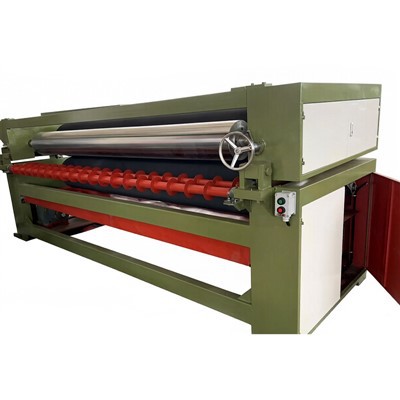
Hot-press for Plywood As a reliable supplier of hot presses for plywood, we are committed to providing our customers with the latest technology and solutions to help them optimize their production processes. Our hot presses are designed to offer precise control over temperature, pressure, and pressing time, which are crucial for moisture content control. If you’re looking to improve the quality of your plywood products through better moisture content management during hot – pressing, we invite you to reach out and discuss your specific needs. Our team of experts is ready to assist you in finding the most suitable solutions for your business.
References
- ASTM D4442 – 16, Standard Test Methods for Direct Moisture Content Measurement of Wood and Wood – Based Materials.
- Panshin, A. J., & de Zeeuw, C. (1980). Textbook of Wood Technology. McGraw – Hill.
- Rowell, R. M. (Ed.). (2005). Handbook of Wood Chemistry and Wood Composites. CRC Press.
Jiashan Changle Machinery Manufacturing Co., Ltd.
We’re well-known as one of the leading hot-press for plywood manufacturers and suppliers in China, also support customized service. Please feel free to buy advanced hot-press for plywood for sale here from our factory. Quality products and punctual delivery are available.
Address: Building 12, Zone A, Wanyang Innovation City, No. 23 Yucao South Road, Ganyao Town, Jiashan County, Jiaxing City, Zhejiang Province
E-mail: Changle84615620@163.com
WebSite: https://www.changlejx.com/
