If you’re deep in the market for storage solutions—whether you’re organizing a garage, a small warehouse, a retail stockroom, or even a walk-in closet—you’ve probably wondered at some point: “Are there actually modular storage shelves that don’t force you to compromise on fit, function, or budget?” Spoiler alert: Yes, and they’re way more versatile than the one-size-fits-all units you might’ve tried and given up on in the past. As someone who’s been in the storage shelf supply game for years, I’ve seen first-hand how modular shelves solve so many headaches that fixed, pre-built units can’t touch. Let me break down why they’re such a game-changer, what to look for, and why they might be exactly what you’ve been missing. Storage Shelf
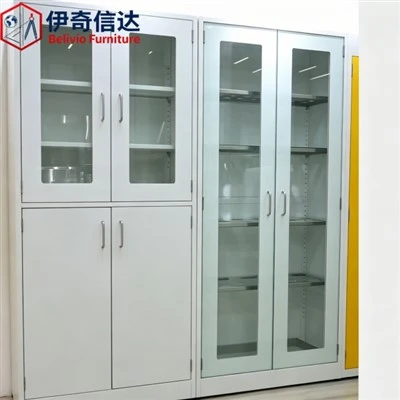
First, let’s get what “modular” actually means here, because a lot of brands slap that label on any shelf that has slightly adjustable shelves—big difference. True modular storage shelves are made of individual, interchangeable components that you can mix, match, add to, or rearrange as your needs change. No more awkwardly cramming a 4-foot-wide unit into a 3.5-foot gap in your garage, or a fixed-height shelf that leaves half your space unused for tall items like a Christmas tree or farm equipment. I’ve had customers come to me complaining about old setups: one small business owner tried 5 different fixed shelves for his back stock, only to have to toss two when he outgrew his shop in a year. With modular, he just added a couple of extra bays and adjusted a few shelf heights—no full replacement needed, and way less cost.
One of the biggest perks of modular shelves is their adaptability, and I’m not just talking about size. Let’s say you’re using shelves for a kid’s playroom now: you can have deep, wide bins for toy bins, adjustable shelf heights for low toy boxes and taller action figure displays. A year from now, if that space becomes a home office? Swap the bins for cubbies that fit file folders or printer paper, adjust the shelves to hold a monitor and a desktop printer. It’s like having multiple storage setups rolled into one—no overbuying for a temporary space. I had a renter last month who’s moving in 18 months, so she didn’t want to spend a fortune on permanent shelves. She picked a set that fit her current apartment closet, then planned to take it apart, reassemble it in her next place, and even add a tier for her new apartment’s bigger pantry. That’s the kind of flexibility you just don’t get with traditional, glued-together or fixed-size units.
Now, let’s talk durability, because a lot of people write modular shelves off as flimsy, cheap stuff. Again, that’s a stereotype from low-end units. The good ones—like the ones we supply—are made of heavy-duty steel or thick, water-resistant wood composites, with interlocking posts and brackets that don’t wobble when you load them with 50+ pounds per shelf. I’ve tested them myself: I stacked 12 cases of canned goods (that’s way more than 50 lbs) on a set in my own garage, and they didn’t budge for two years, even when I bumped them with a lawnmower. Unlike cheap particleboard shelves that chip or break when you move them, modular units’ components are designed to be taken apart and put back together multiple times without falling apart. That’s why they’re so popular for commercial use too—small warehouses, retail stores, even gyms use them for equipment storage, because you can rearrange the layout fast when inventory shifts or space changes.
Wait, but what about customization? Let’s say you have a weirdly shaped space: a slanted garage ceiling, a nook under a staircase, a commercial space with odd wall dimensions. Modular shelves let you build to fit, not the other way around. You can get narrow 12-inch-deep bays for tight spots, wide 48-inch bays for bulk items, adjustable shelf depths if you need something to fit deep appliances or shallow craft supplies. Some brands even add accessories—bin inserts, pegboard backs, lockable doors for security, casters to make them mobile (perfect if you need to roll shelves out of the way for a party or a big delivery). I had a customer who runs a flower shop; she built a set of modular shelves with casters and shallow shelves that fit her vases, then rolled them out of the way after closing to make space for display tables. You can’t do that with a fixed wall shelf.
Of course, there are a few things to watch out for when you’re shopping for modular storage shelves, so you don’t end up with a dud. First, check the weight capacity per shelf—cheap modular units often have a max of 20-30 lbs, which is fine for light items like books or pantry snacks, but useless for heavy tools, parts, or appliances. If you’re storing heavy stuff, look for units with a 50+ lb per shelf rating, and make sure the brackets are thick, not flimsy plastic. Second, check if the components are compatible if you want to add to them later. Some brands make their modular systems proprietary, so you can only add shelves from their own line—if you want to expand 2 years down the line, you have to buy a whole new unit. The good news is, most quality suppliers (including us) make universal modular shelves that work with extra bays and shelves from the same line, so you can build as big as you need, whenever you need it. Third, think about assembly—modular shelves should be easy to put together, no fancy tools required. The last thing you want is to spend 3 hours trying to screw together 100 tiny parts, especially if you’re not handy. A lot of our customers tell us they put their shelves together in 20-30 minutes, just with a screwdriver—way faster than building a custom shelf from scratch.
I get why some people hesitate: they’ve had bad experiences with generic storage shelves that don’t fit right, fall apart, or cost more than they’re worth. But modular shelves are built to solve those exact problems. They’re not just for big warehouses—they’re for renters who can’t install permanent shelves, small business owners who need to adjust as they grow, homeowners who want to reorient their space without buying all new furniture. I’ve helped hundreds of customers find the right set: a single bay for a bathroom linen closet, a 10-bay set for a hardware store stockroom, a compact set for a dorm room mini-fridge and snacks. No matter what your space or needs are, there’s a modular setup that works.
If you’re tired of storage that doesn’t fit, break when you need it to, or costs a fortune to adapt, modular storage shelves are absolutely worth a closer look. Whether you’re organizing a small nook or a large space, the flexibility, durability, and cost-savings of modular units make them one of the most practical storage solutions out there today.

If you’re ready to explore modular storage shelves that fit your exact needs, we’re here to help. Reach out to chat through your space, weight requirements, and layout ideas—no pressure, just honest advice to get you the storage that works for you.
Bed References
- National Association of Professional Organizers. (2022). Commercial Storage Solutions Guide.
- International Warehouse Logistics Association. (2023). Modular Storage Systems for Small and Mid-Sized Facilities.
- Home Improvement Research Institute. (2021). Consumer Storage Trends: Modular vs. Fixed Shelf Preferences.
Luoyang Belivio Furniture Co., Ltd.
As one of the most professional storage shelf manufacturers in China, we have world-leading production equipment and strong manufacturing capabilities. Welcome to buy high-end storage shelf for sale here from our factory. Quality products and reasonable price are available.
Address: A7-4-601, Hundsun Science and Technology Park, Luolong District, Luoyang City, Henan Province, China
E-mail: belivio@toda.group
WebSite: https://www.beliviofurniture.com/
